
Despite one’s best intentions, even an activity that should promote inner peace and spiritual reflection can’t be fulfilled without at least a basic plan. As a retiree, I would prefer to be spontaneous, but it’s not to be. There are still family and other obligations that need to be minded. For her peace of mind, my 95 year old mother wants to know where I’ll be each day, although small town names like Alvaizere or Vilarinho won’t mean a thing to her. My wife, Nancy, wants to know too, but we’ll be in constant contact through tech devices in any case. A long walk on any of the Camino routes definitely lifts us out of our daily ruts, but sadly not sufficiently that we can be entirely independent of our non-Camino lives. And so I plan.
First come the flight plans. I’m booked to Lisbon, via Dallas and Madrid, leaving home (Boise, Idaho) on August 25th. The return flight leaves Santiago de Compostela one month later, September 25th, making the same transfer stops along the way. That gives me 30 days to walk from Lisbon to Santiago, but as this will be my first time in Portugal, a little sight-seeing and resting of weary limbs will be in the plan as well.
Then comes the detailed plan. Lisbon, is a must-see, so I’m looking forward to 2.5 days (hah, you already forgot that I’m a banker, and a German-born one to boot, so precision is hard-wired into me) of active tourism. I’ll start walking north on the 29th. The classic route runs along the Tagus River (Rio Tejo) which flows down around the eastern edge of Lisbon before it spills into the Atlantic just below the city’s southwestern point. It’ll take three days to get to Santarem, a place where Julius Caesar established a camp for his troops in the first century AD. (I go crazy over history, so brace yourself if you’re going to read my “short thoughts.”) A few more days of hoofing it will take me to Tomar where I’ll take my first break en-route. More Roman history underlies this city in Portugal’s bread-basket region, but so does Knights Templar and Moorish history. More on that when I get there. Then just three days before I take another break in Coimbra. By now you know why – history. Again, three days of walking should get me to Porto (aka: Oporto), the second largest city in Portugal, but, according to many, its most beautiful and most fascinating. That reputation deserves two full rest days to savor it all.
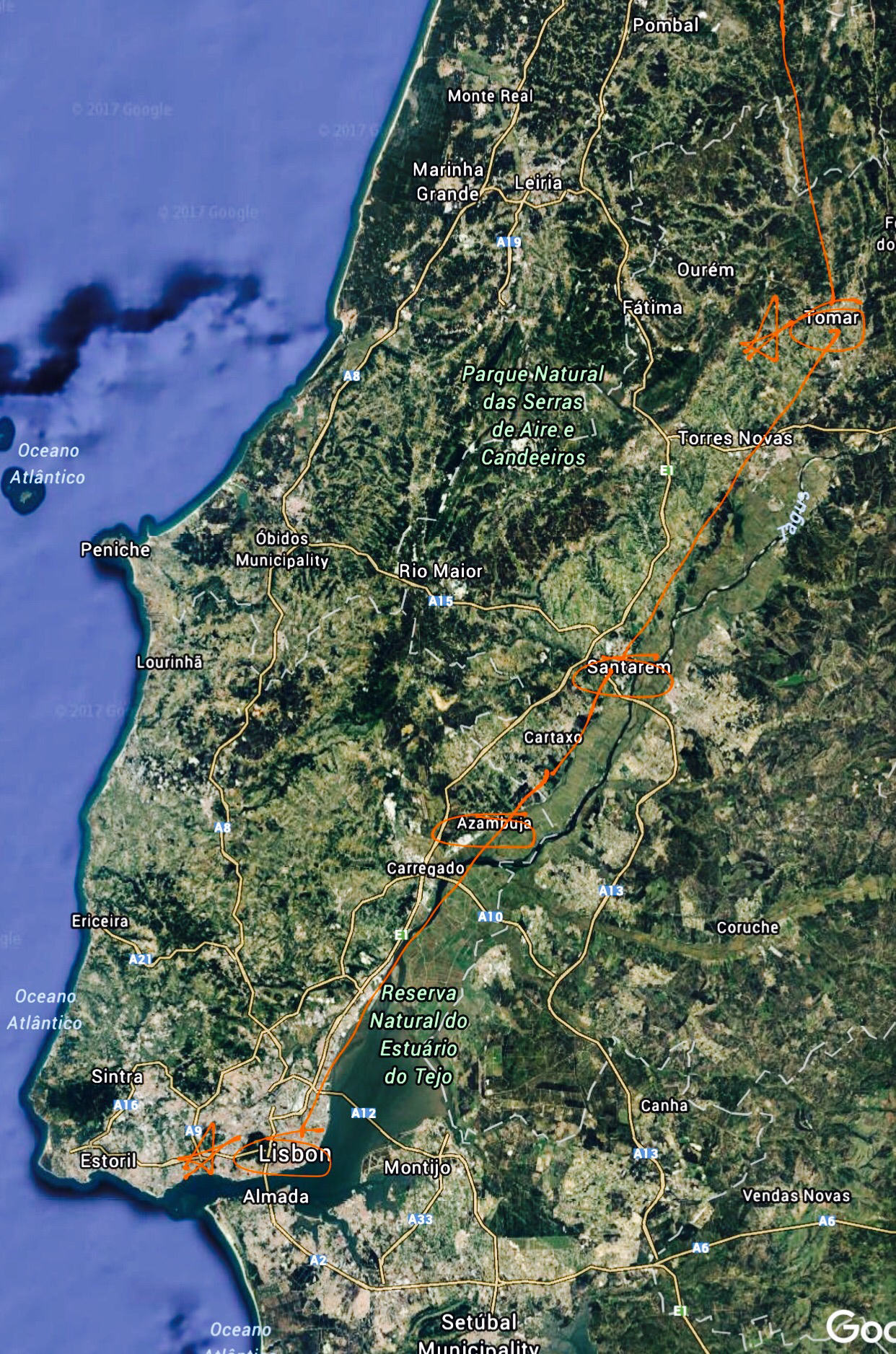
Up to this point there’s generally not much argument about which path to follow, but in Porto the paths diverge and so do the opinions of pilgrims. The coastal route, hugging the beaches and traversing the coastal resort towns, is a popular choice for many. Similarly the “Senda Litoral” stays close to the coast and offers long stretches of boardwalk. I should add that many pilgrims, especially those with limited time, start in Porto, foregoing the stretch from Lisbon to there. All Camino routes have alternate paths which may lead to notable destinations that are off the main route, perhaps a monastery, but this divergence seems to be the greatest for the stages north of Porto. The spontaneous pilgrim might not want to commit in advance, leave his options open, but since I let you know that I can’t afford that luxury, I’ve decided to follow the central route.
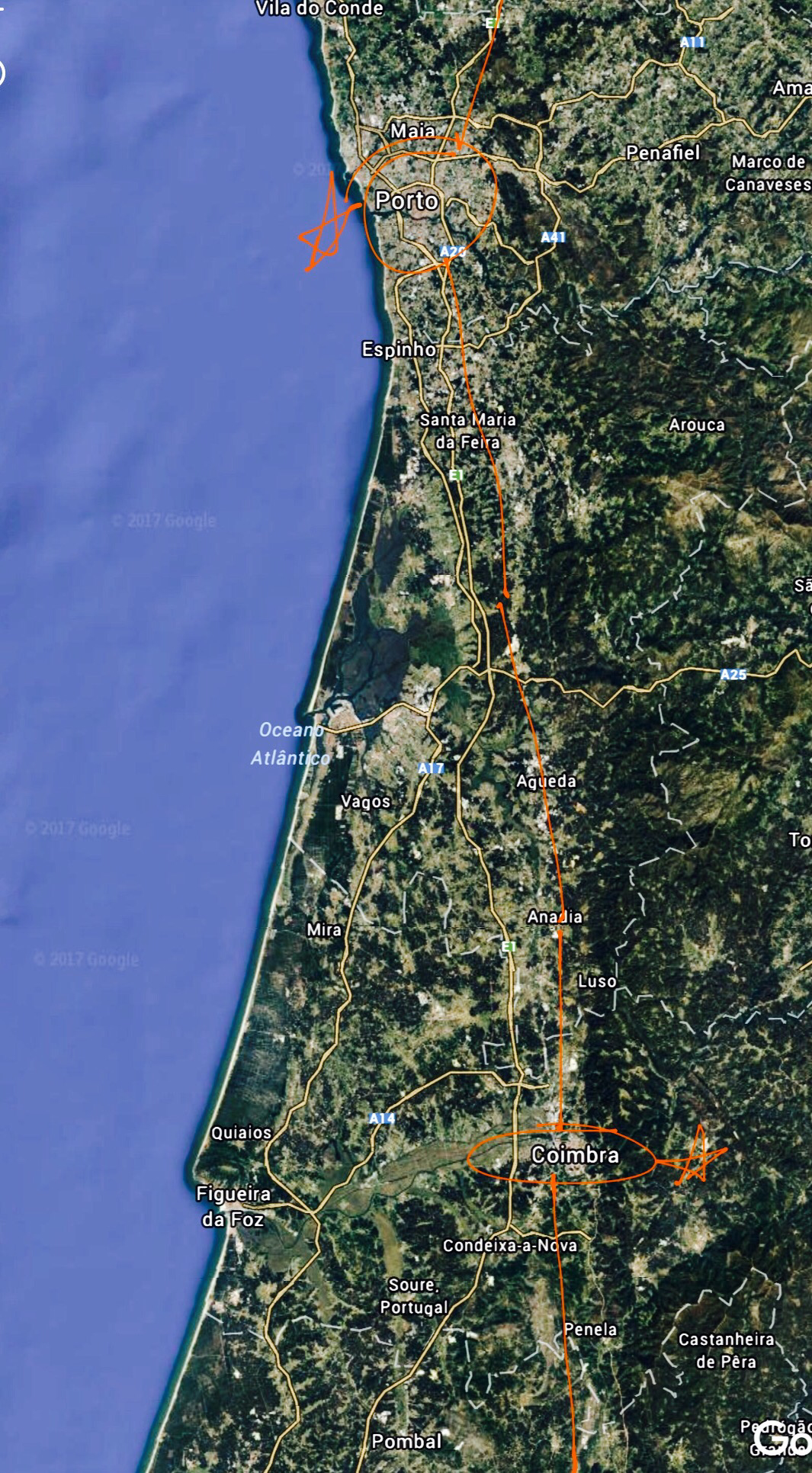
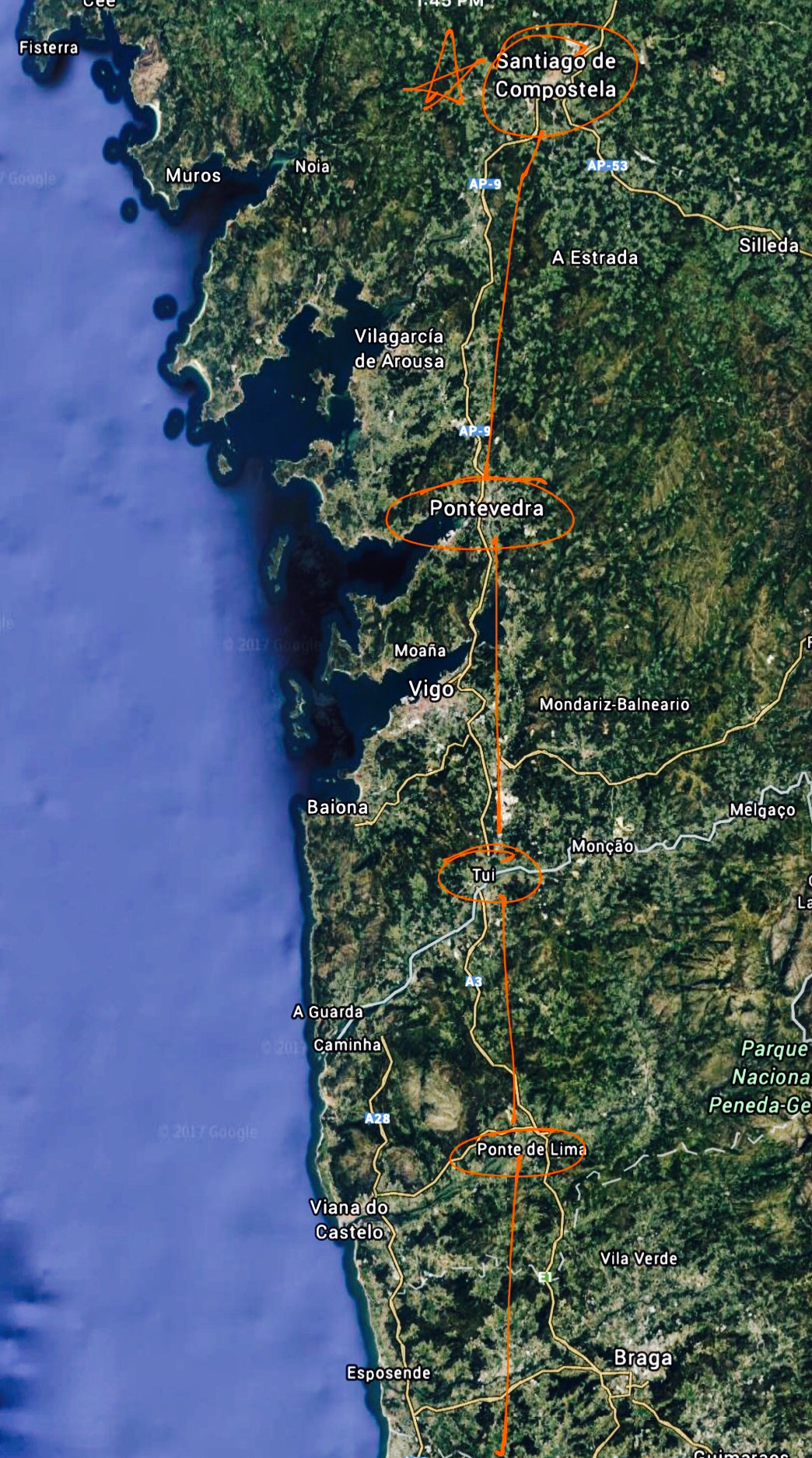
From Porto, I’ll need to walk for ten straight days to cover the 215km (134 miles) to Santiago de Compostela with an expected arrival on Saturday, Sep. 23rd. I’ll recover there for a day, enjoying the magic of the place where the various Caminos – and the hundreds of pilgrims each day – end in front of the Cathedral of Saint James. I’m not Catholic but I’ll attend the daily Pilgrims’ Mass because it’s the perfect way to feel the joy and the gratitude for having accomplished a great journey, regardless of faith. I already know, I’ll walk out – hopefully on a sunny day – with well-washed eyes and tingle throughout my body.
Then I’ll be heading back home.
 Short Thoughts on Long Walks